






loose faucet Base Causing Water Leakage
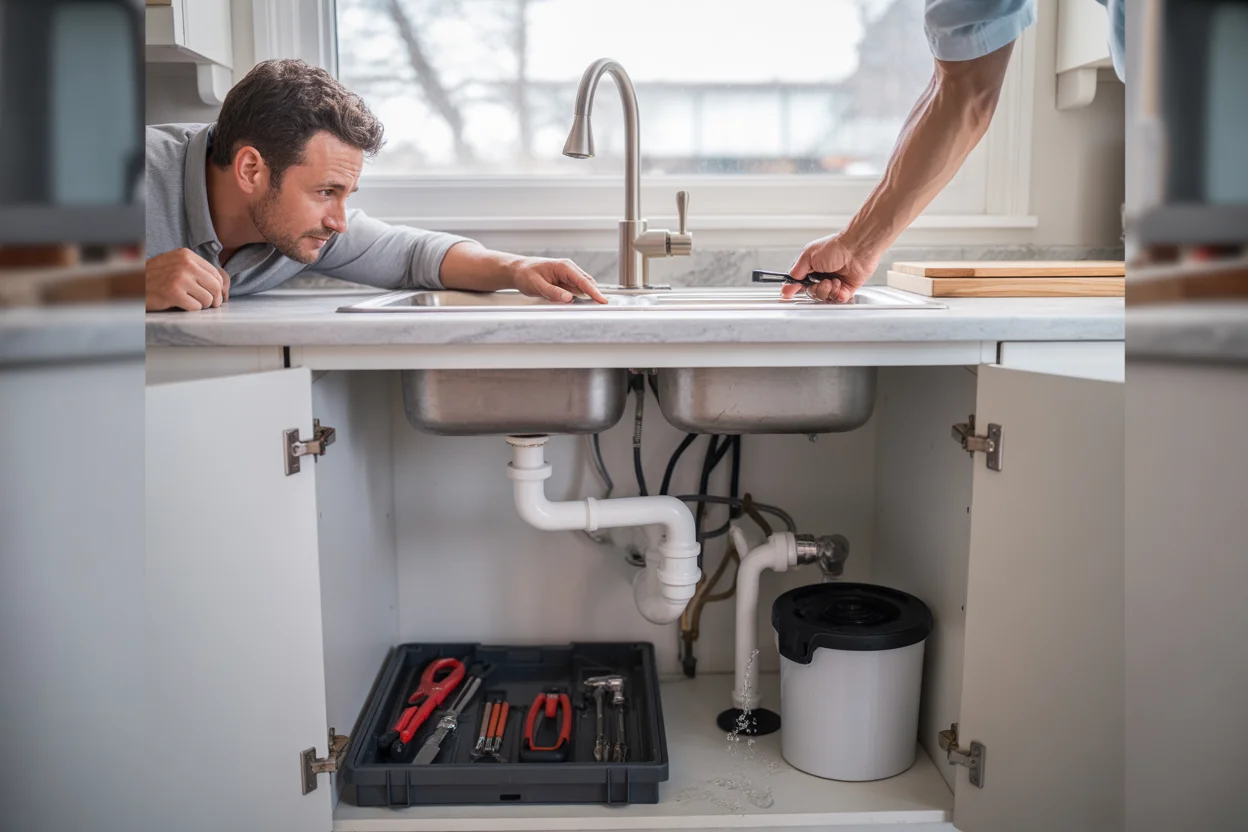
A loose faucet base is one of the most common reasons for a leaking kitchen sink. Over time, daily use can cause the base to shift slightly, allowing water to seep underneath. This is especially common in busy USA households where sinks are used frequently for cooking and cleaning. The leak may appear small at first but can lead to bigger issues if ignored. You might notice water pooling around the base or dripping underneath the sink.
To fix this issue, start by turning off the water supply to avoid any mess. Tighten the mounting nuts under the sink using a wrench or adjustable tool. If the seal is worn out, apply plumber’s putty or replace the gasket for a better fit. Make sure everything is secured firmly before turning the water back on. Regular checks can help prevent this problem in the future.
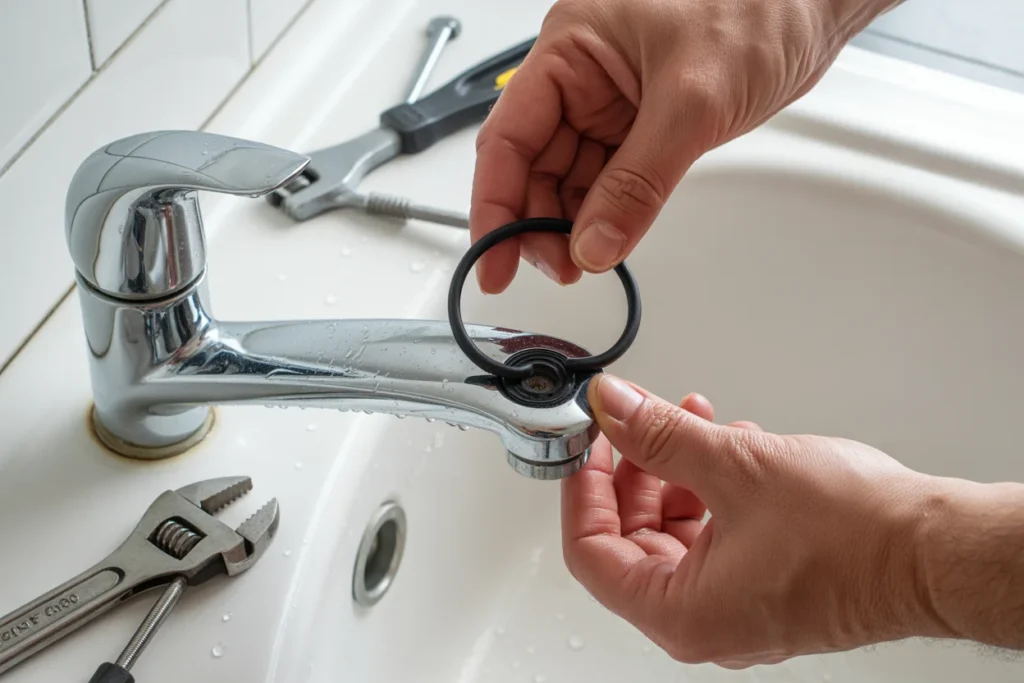
Worn Out O-Ring Leading to Faucet Drips
A worn-out O-ring inside the faucet can cause persistent dripping. This small rubber ring plays a big role in sealing the faucet components. In many USA kitchens, frequent use leads to wear and tear over time. When the O-ring becomes damaged, water starts leaking near the handle area. This issue is easy to overlook but can waste a lot of water.
To fix it, remove the faucet handle carefully and locate the O-ring. Replace it with a new one that matches the size perfectly. Apply a bit of plumber’s grease to ensure a smooth fit. Reassemble the faucet and test it for leaks. This simple fix can restore your faucet’s performance quickly.
Clogged Drain Pipe Causing Overflow Issues
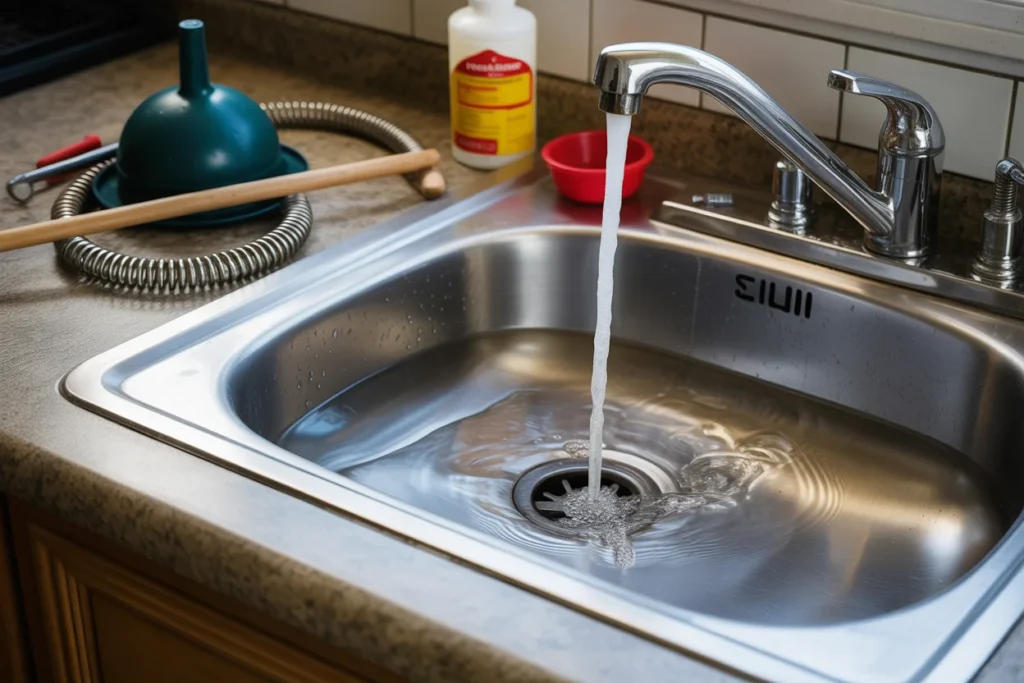
A clogged drain pipe can lead to water backing up and leaking from unexpected places. Food particles, grease, and debris often build up inside the pipes over time. This is a common issue in many USA kitchens where daily cooking is frequent. The blockage can cause slow drainage and eventually overflow. Ignoring this problem can lead to unpleasant odors and bigger plumbing issues.
To fix this, use a plunger or a drain snake to remove the blockage. You can also pour a mixture of baking soda and vinegar to break down grease buildup. Flush the drain with hot water to clear any remaining residue. Regular cleaning helps prevent future clogs. Keeping the drain clean ensures smooth water flow.
Damaged Sink Gasket Causing Hidden Leaks
A damaged sink gasket can cause leaks that are not immediately visible. The gasket acts as a seal between the sink and the countertop. Over time, it can crack or wear out due to moisture and usage. This is common in older USA kitchens or heavily used sinks. Water may seep underneath and cause damage to cabinets.
To fix this issue, remove the sink carefully and inspect the gasket. Replace it with a new one if it shows signs of wear. Apply a waterproof sealant for extra protection. Reinstall the sink securely to prevent future leaks. Regular inspection helps maintain a leak-free kitchen.
Loose Pipe Connections Under Sink Area
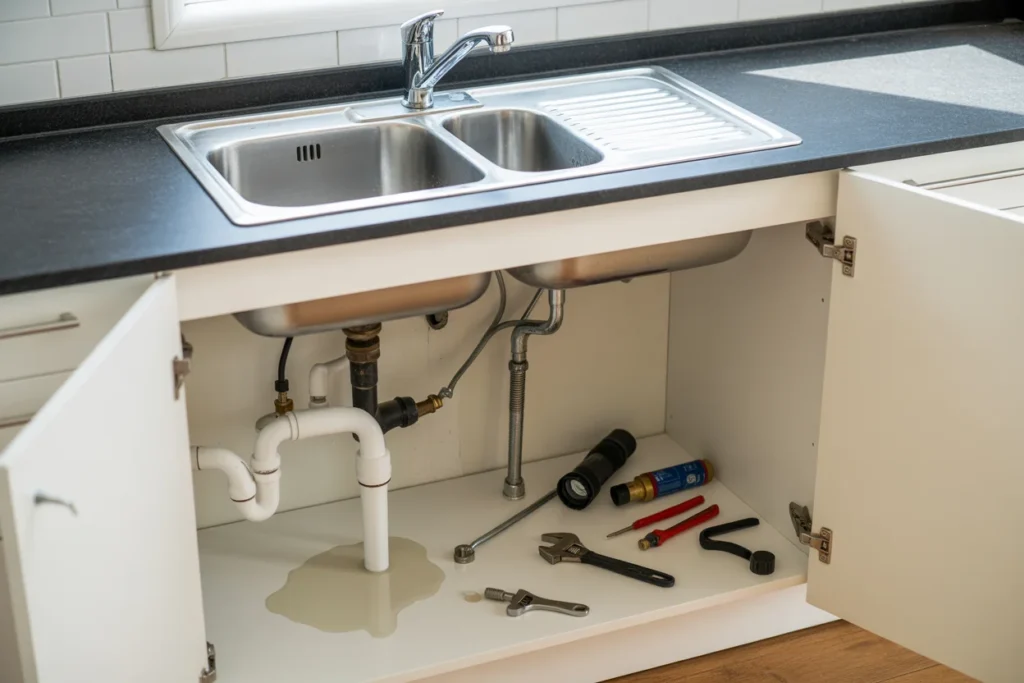
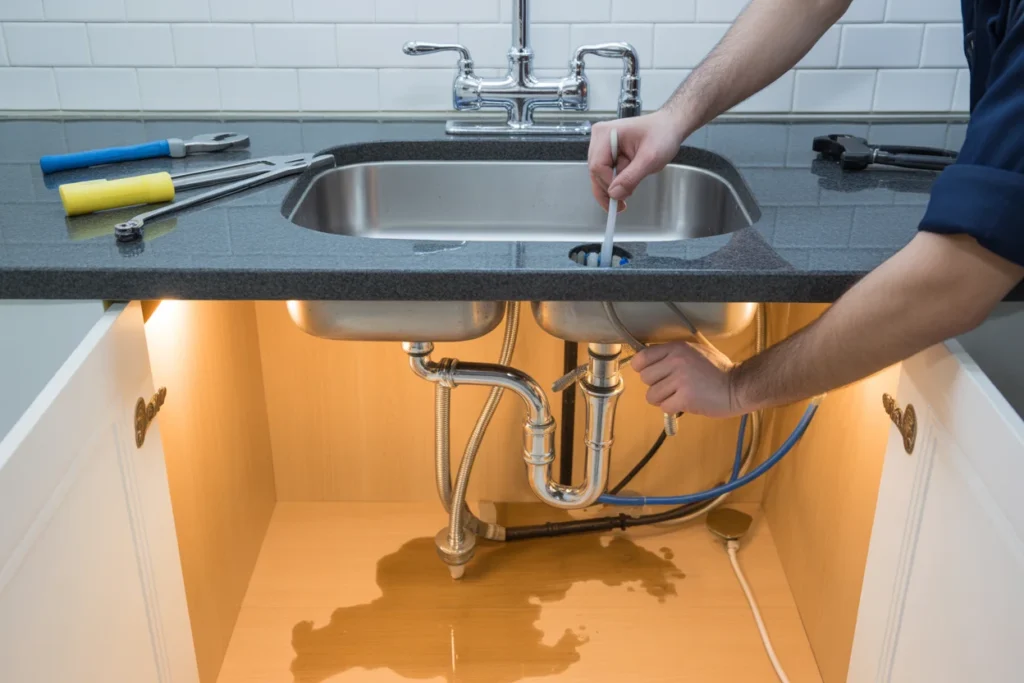
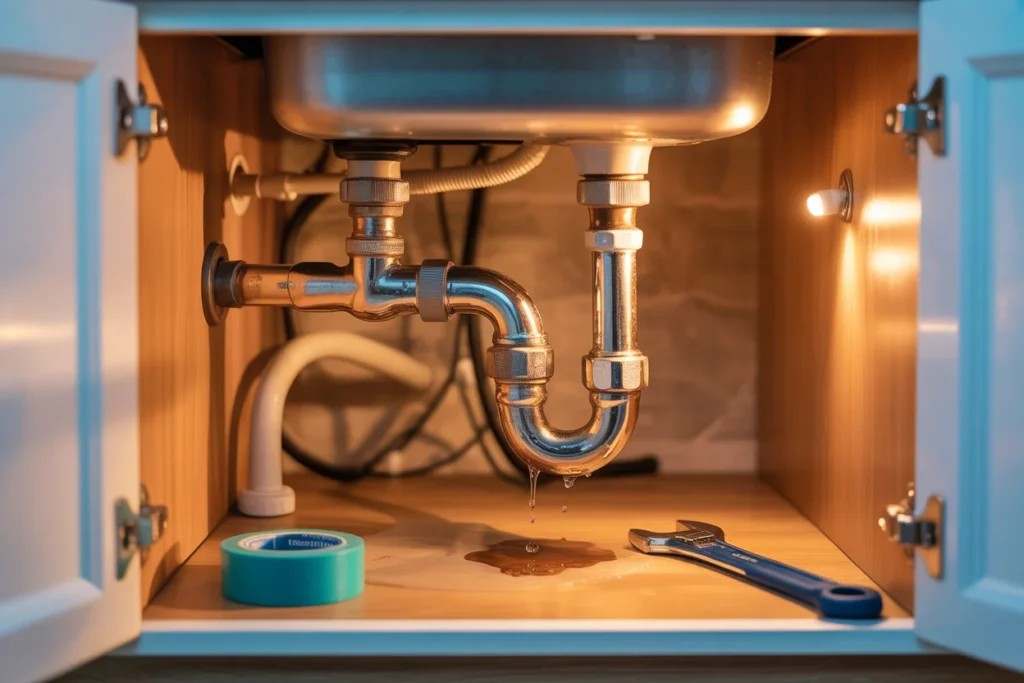
Loose pipe connections are a frequent cause of leaks under the sink. Vibrations and daily use can cause fittings to loosen over time. This issue is commonly found in U.S. homes with older plumbing systems. In modern design kitchens, even sleek cabinetry can hide these small plumbing issues until they become visible. You may notice dripping water or damp areas under the cabinet. If not fixed, it can lead to mold and damage.
To fix this, tighten all pipe connections using a wrench. Be careful not to overtighten, as it can damage the threads. Check for worn washers and replace them if needed. Turn on the water and inspect for leaks. Regular maintenance can prevent this issue, especially in modern design kitchen setups where clean finishes make early detection important.
Cracked Sink Bowl Allowing Water Seepage
A cracked sink bowl can cause water to leak directly into the cabinet below. Even small cracks can expand over time due to pressure and temperature changes. This problem is less common but still occurs in some USA households. The leak may be slow but can cause serious damage if ignored. It often requires immediate attention.
To fix minor cracks, use a waterproof epoxy designed for sinks. For larger damage, replacing the sink is the best option. Make sure to choose a durable material for long-term use. Regular inspection can help catch cracks early. This ensures your kitchen remains safe and functional.
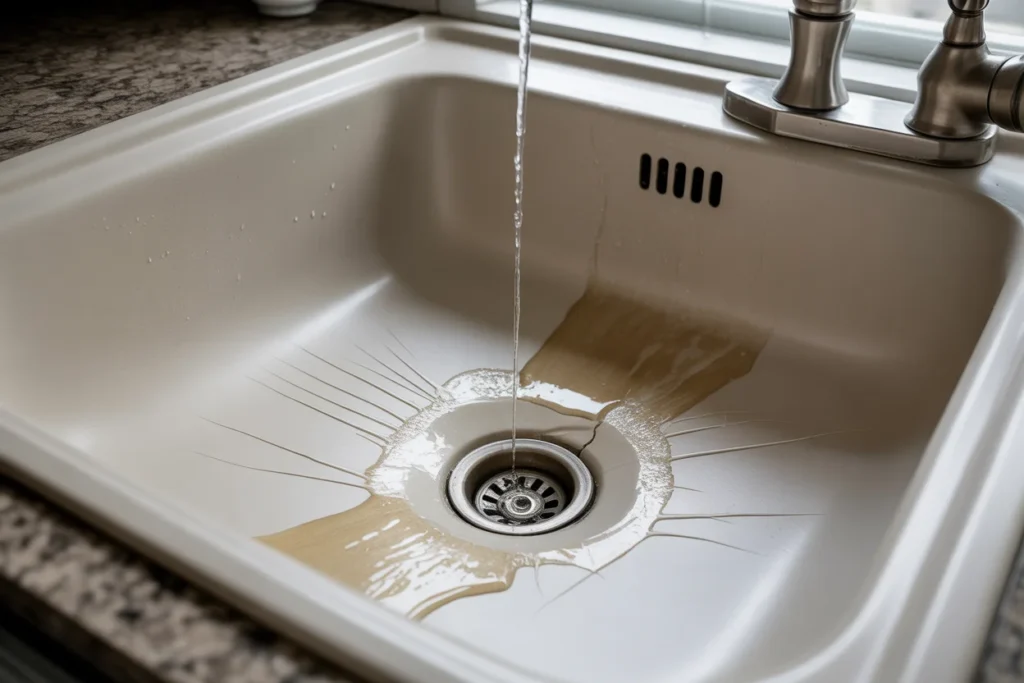
Faulty Water Supply Lines Causing Leaks
Water supply lines can develop leaks due to wear and tear. These flexible hoses connect your faucet to the water supply. In many USA kitchens, they may weaken over time or become loose. A damaged line can cause continuous dripping or sudden leaks. It’s important to address this issue quickly.
To fix it, turn off the water supply and inspect the hoses. Replace any damaged or worn-out lines with new ones. Ensure all connections are tight and secure. Turn the water back on and check for leaks. This simple fix can prevent major water damage.
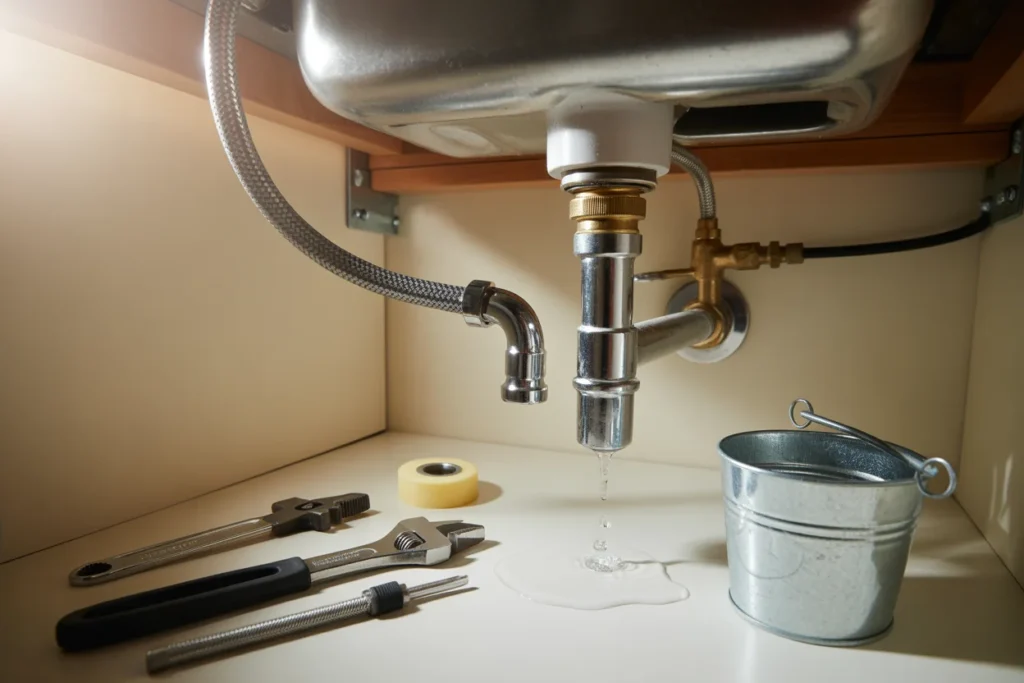
High Water Pressure Causing Pipe Stress
High water pressure can strain your plumbing system and cause leaks. While strong pressure may seem beneficial, it can damage pipes and fittings. This issue is found in some USA homes with unregulated water systems. Over time, the stress leads to small leaks and cracks. It can also reduce the lifespan of your fixtures.
To fix this, install a pressure regulator to control water flow. Check your home’s water pressure using a gauge. Adjust it to a safe level to prevent damage. Regular monitoring helps maintain a stable system. This ensures long-term plumbing health.
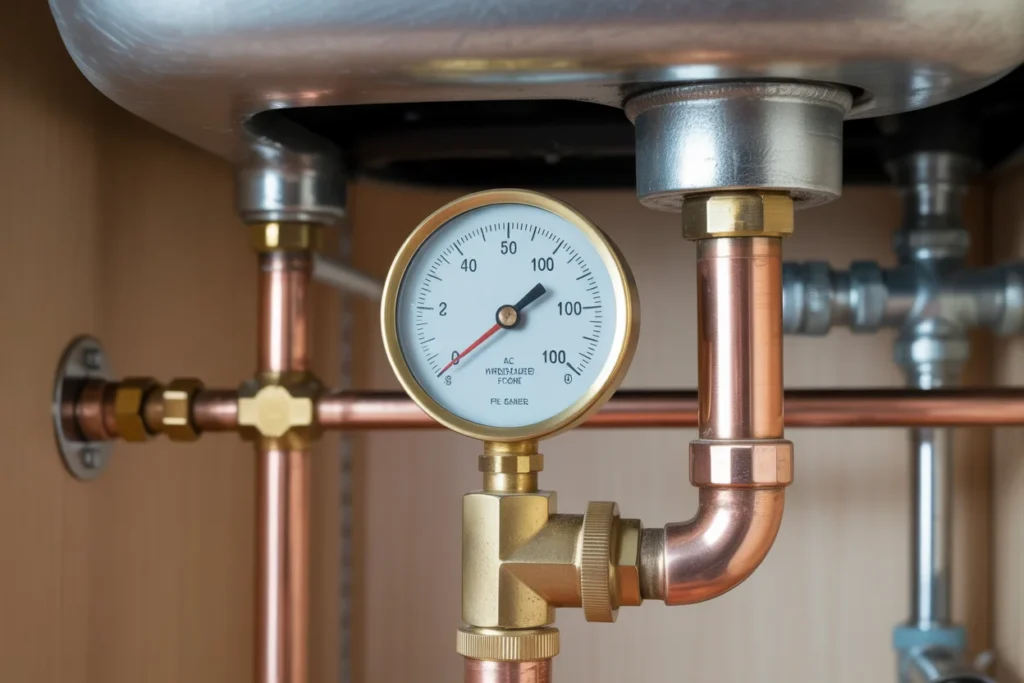
Corroded Pipes Leading to Slow Leaks
Corroded pipes are a common issue in older kitchens. Over time, metal pipes can rust and weaken. This leads to small leaks that may go unnoticed at first. In USA homes with older plumbing, this is a frequent concern. The damage can worsen if not addressed, especially in a busy kitchen where water usage is constant.
To fix this, replace the affected pipe sections with new materials. Modern pipes like PVC are more durable and resistant to corrosion. Inspect your plumbing system regularly for signs of rust. Early detection can save costly repairs. Keeping pipes in good condition prevents leaks in your kitchen and helps maintain a safe, functional space.
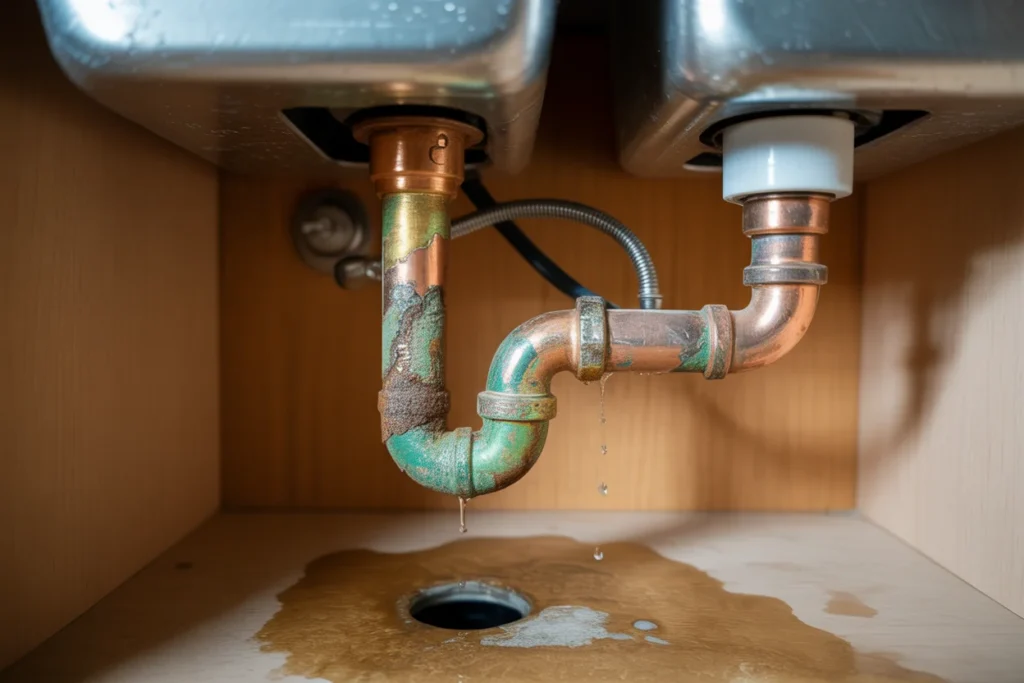
Loose Sink Strainer Causing Water Drips
A loose sink strainer can allow water to leak around the drain area. This component connects the sink to the drain pipe. Over time, it can become loose or the seal may wear out. This issue is common in frequently used USA kitchens. You may notice water dripping underneath the sink.
To fix it, tighten the strainer using a suitable tool. If the seal is damaged, replace it with a new one. Apply plumber’s putty to ensure a tight seal. Reassemble and test for leaks. This quick fix can stop annoying drips.
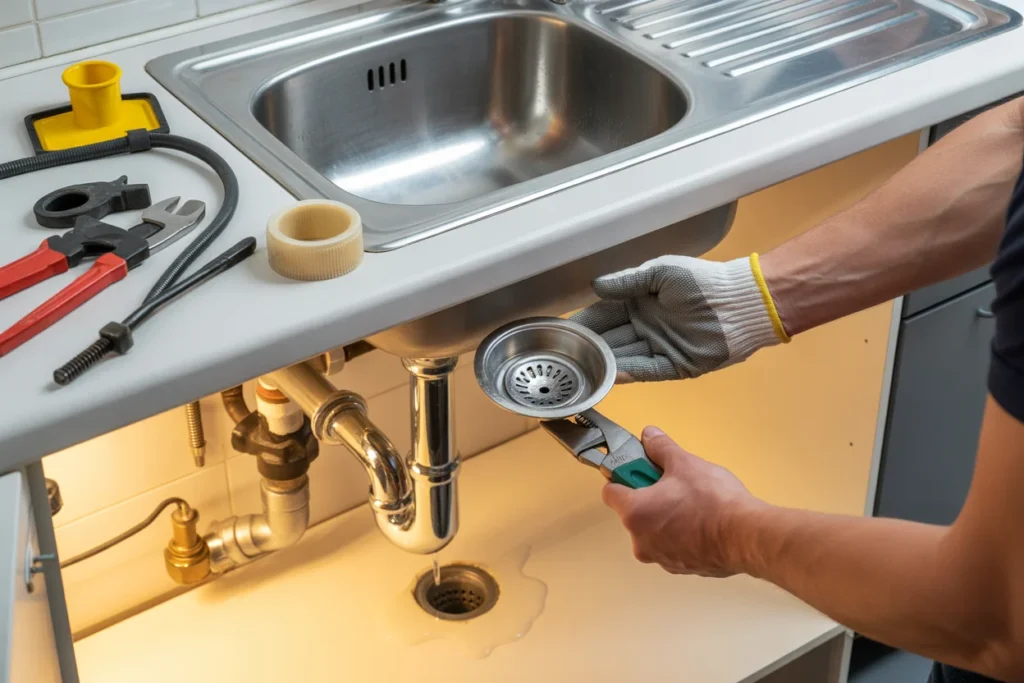
Dishwasher Connection Causing Hidden Leaks
The dishwasher connection under the sink can sometimes leak. This is often due to loose hoses or worn seals. In many USA homes, the dishwasher shares plumbing with the sink. A leak here can go unnoticed until damage appears. It’s important to check this area regularly.
To fix it, inspect the hose connection and tighten it if needed. Replace any worn or damaged parts. Run the dishwasher and check for leaks. Keeping this connection secure prevents hidden water damage. Regular checks are essential.
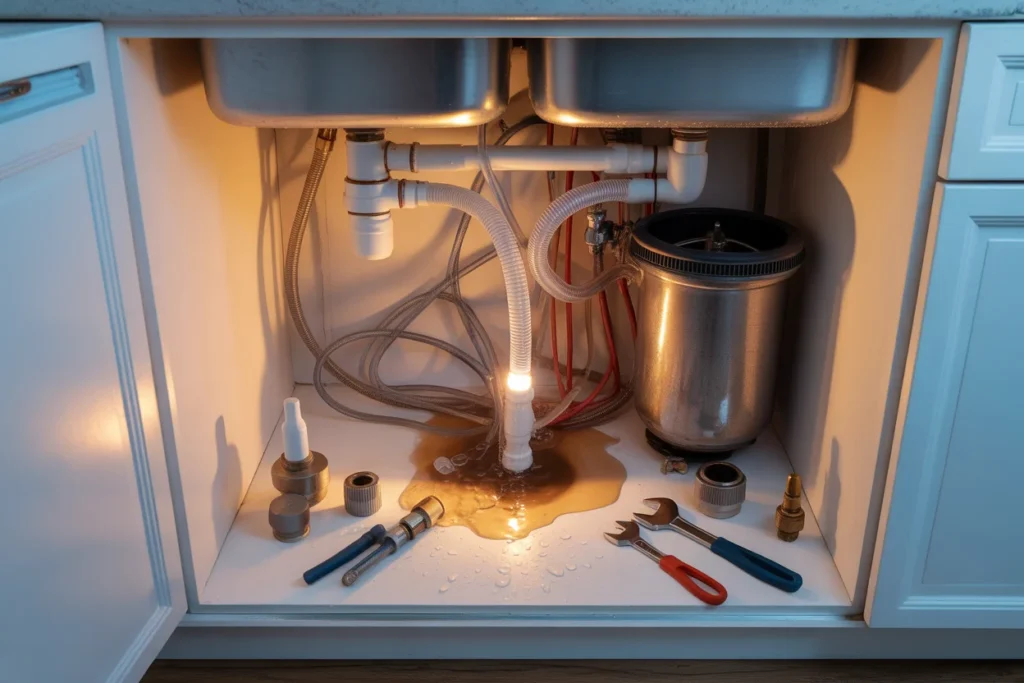
Garbage Disposal Unit Causing Water Leaks
A leaking garbage disposal unit can create a mess under the sink. This appliance is commonly used in USA kitchens for food waste management. Over time, seals and connections can wear out. Leaks may occur from the bottom or sides of the unit. Ignoring it can lead to bigger issues.
To fix it, check all connections and tighten them. Replace worn seals or gaskets if necessary. If the unit is damaged, consider replacing it. Regular maintenance helps extend its lifespan. Keeping it in good condition prevents leaks.
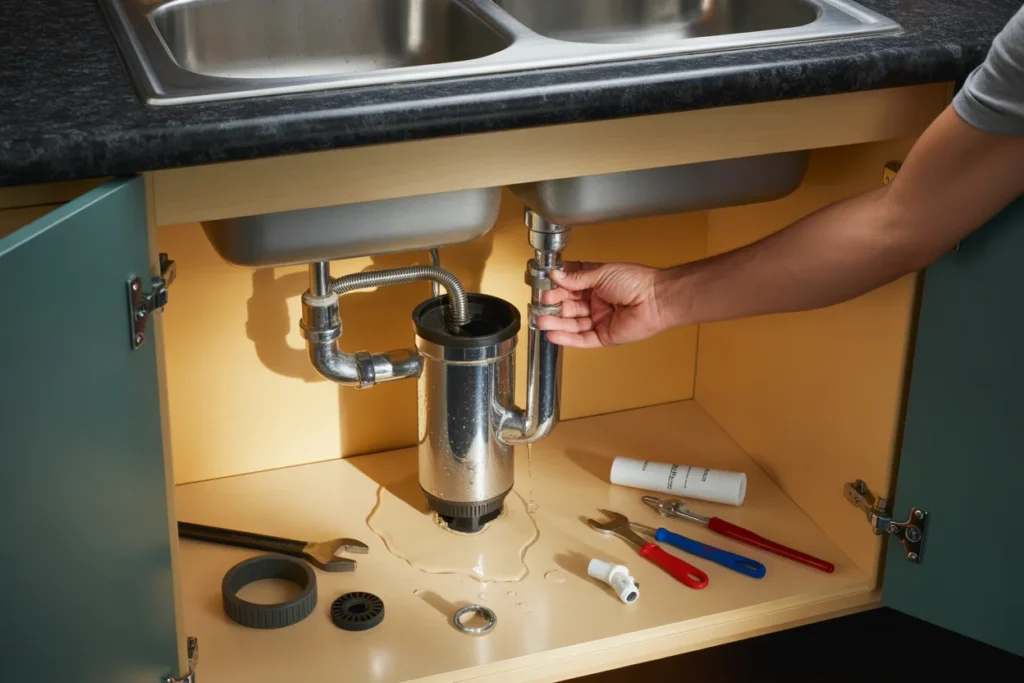
Improper Sink Installation Causing Leaks
Improper sink installation can lead to ongoing leakage issues. If the sink is not sealed correctly, water can seep through gaps. This is sometimes seen in DIY installations in USA homes. The problem may not appear immediately but develops over time. It can damage countertops and cabinets.
To fix this, remove the sink and reinstall it properly. Use a high-quality sealant for better protection. Ensure all edges are sealed tightly. Test for leaks after installation. Proper setup prevents future problems.
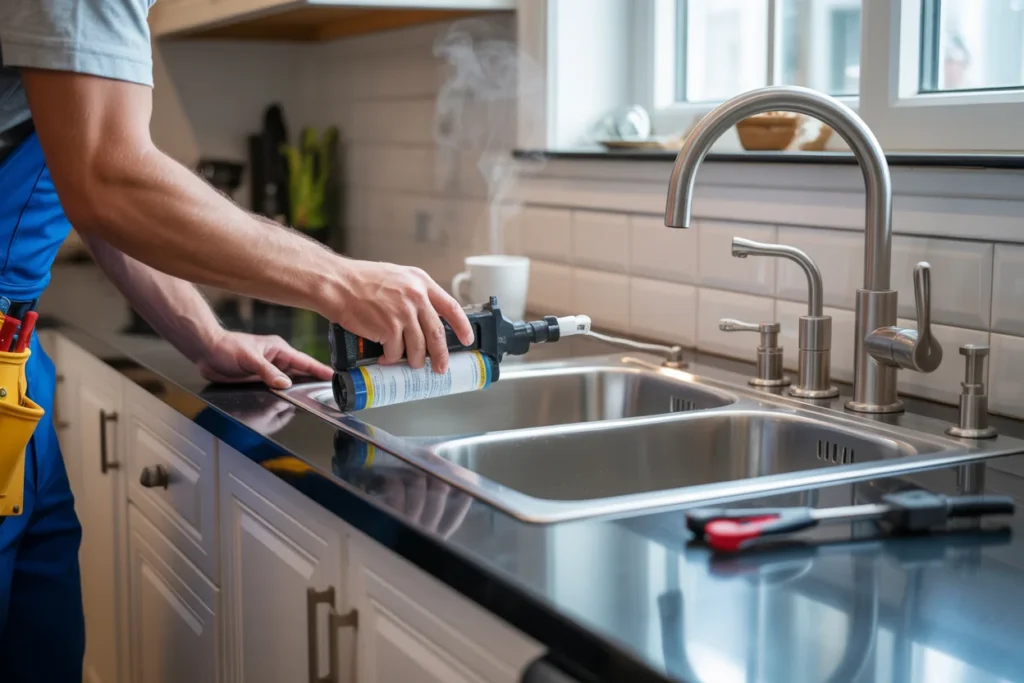
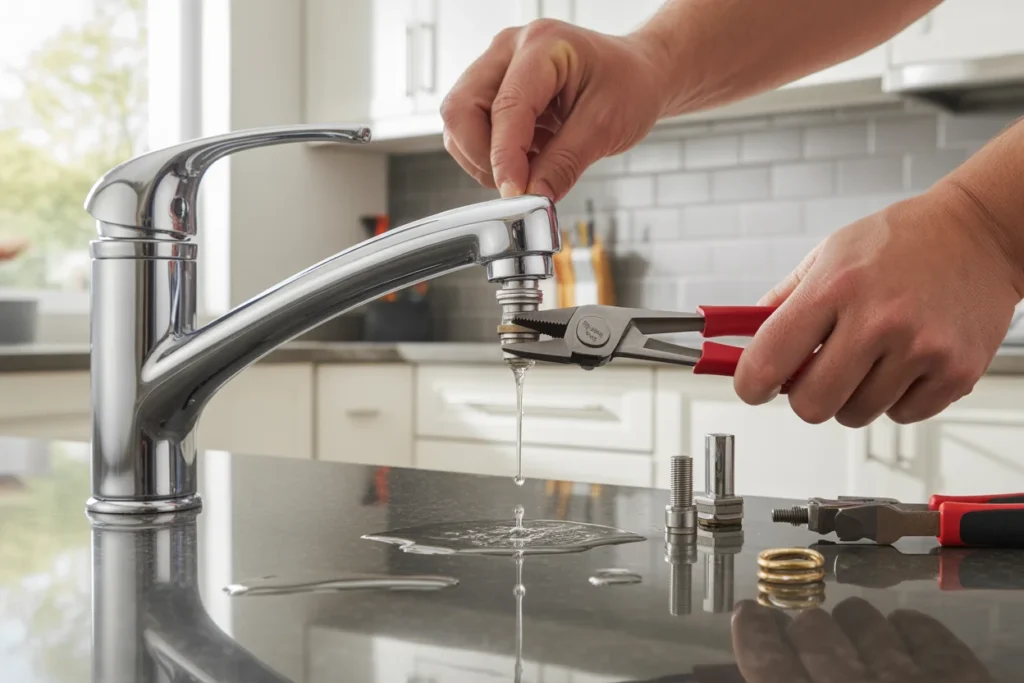
Worn Faucet Cartridge Causing Dripping
A worn faucet cartridge can cause continuous dripping. This component controls water flow inside the faucet. Over time, it can wear out due to regular use. This issue is common in many USA kitchens. It leads to water waste and higher bills.
To fix it, remove the faucet handle and replace the cartridge. Make sure to use the correct size and type. Reassemble the faucet and test it. This simple repair can stop the dripping. Regular maintenance keeps faucets working efficiently.
Sealant Failure Around Sink Edges Area
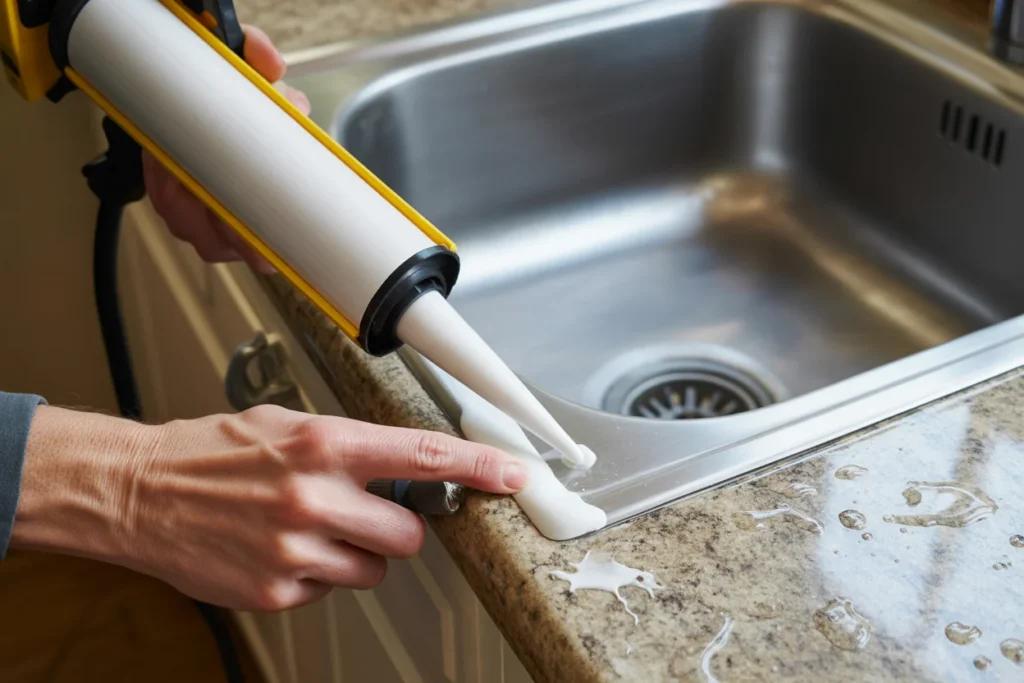
Sealant around the sink edges can wear out over time. This allows water to seep between the sink and countertop. It is a common issue in busy USA kitchens. The leak may not be visible immediately but can cause hidden damage. Mold and mildew can also develop.
To fix this, remove the old sealant and clean the area thoroughly. Apply a fresh layer of waterproof silicone sealant. Smooth it evenly for a neat finish. Allow it to dry completely before using the sink. This ensures a tight and secure seal.
Join the Conversation